- Vadym Humeniuk - Resident Architect
- Datapunkt BI possibilities
- Hits: 258
Building Semantic Layer in Datapunkt BI
Introduction
In the landscape of modern business intelligence, constructing a robust semantic layer is pivotal to bridging the gap between raw data and meaningful insights. Datapunkt BI, a cutting-edge visualization tool, introduces a powerful Semantic Layer designed to enhance user interactions and streamline data analytics. In this exploration, we delve into the significance of schemas within Datapunkt BI and how they contribute to a cohesive and efficient business intelligence ecosystem.Unveiling Datapunkt BI Semantic Layer
The Datapunkt BI Semantic Layer serves as an abstraction, translating intricate raw data stored in warehouses or lakes into a format that end-users can effortlessly comprehend. This layer offers a user-friendly interface for modeling data, defining metrics, and managing business logic. Key benefits include:
1. Simplified Data Exploration and Analysis
Users can interact with data using familiar terms and concepts, eliminating the need for complex SQL queries. Datapunkt BI ensures a more intuitive and user-friendly experience for data exploration and analysis.
2. Consistent Metric Definitions
A standardized approach to metric definitions ensures uniformity across the organization, mitigating discrepancies and fostering a shared understanding of key performance indicators.
3. Improved Governance and Data Quality
Centralized control over data definitions and access rules enhances governance. Datapunkt BI becomes a single source of truth, promoting data quality and minimizing inconsistencies.
4. Enhanced Performance and Scalability
The Semantic Layer optimizes query performance and handles large datasets effectively. Datapunkt BI maintains structured and organized interactions with data, ensuring performance and scalability even with complex analyses.
Simplifying Data Exploration
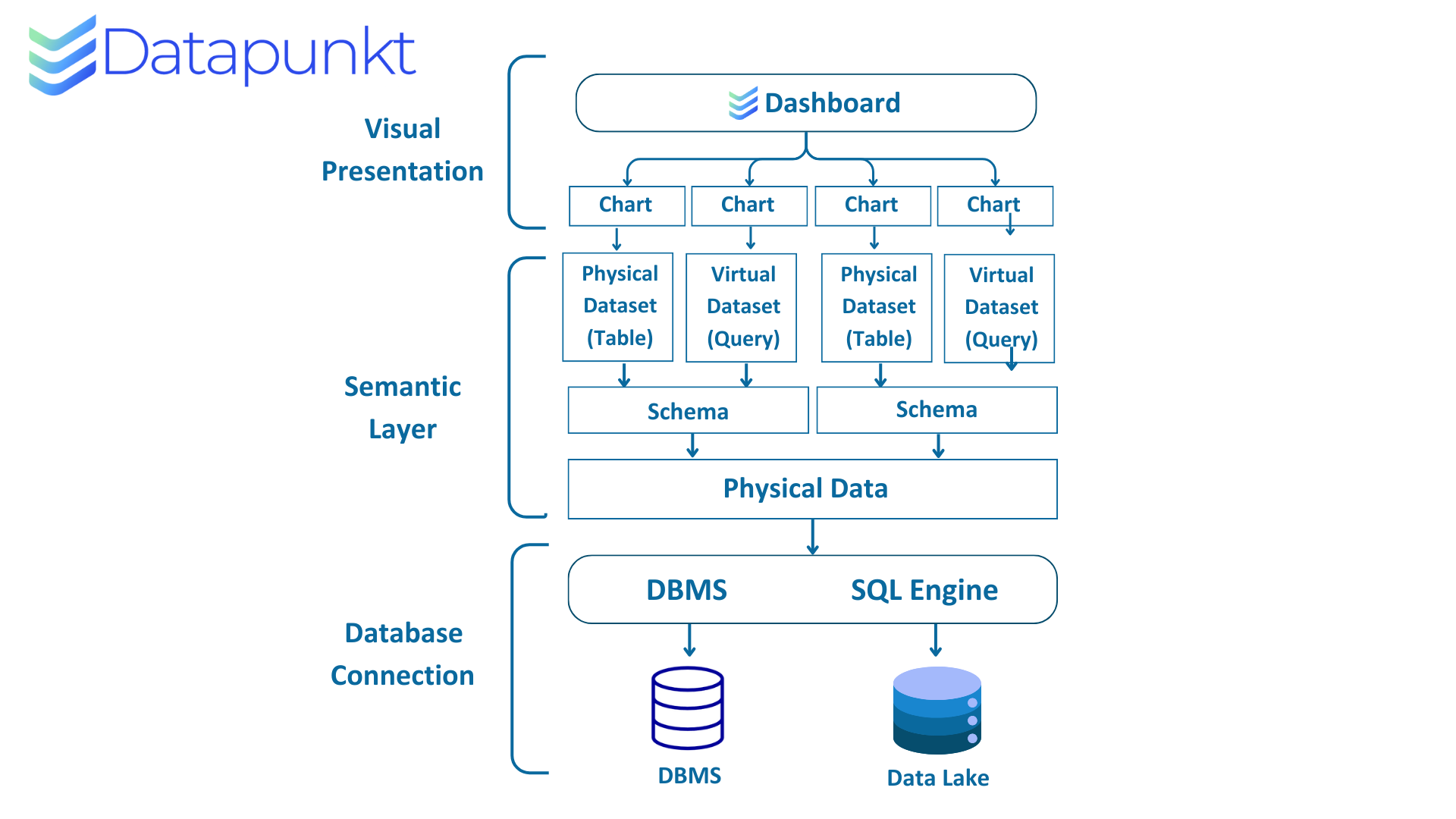
By treating datasets as first-class citizens, Datapunkt BI simplifies the process of data exploration and visualization. Users can seamlessly query, analyze, and visualize datasets within the platform, without the need for manual intervention or complex setup procedures. Datapunkt BI empowers users with greater control over the dataset creation process. Users can define virtual datasets directly within the platform, eliminating the need to navigate to external tools like SQL Lab. This streamlined workflow enhances efficiency and usability.
Unlike in traditional models where datasets are tightly coupled with tables, Datapunkt BI introduces datasets as distinct entities. This separation allows for greater flexibility and clarity in managing and organizing data sources.
The semantic layer model in Datapunkt BI explicitly represents relationships between datasets, tables, and views. This clear depiction of relationships enhances data understanding and ensures consistency in data management practices. We leverage the ability to parse SQL queries to extract referenced tables, ensuring robust security measures and regulatory compliance. This proactive approach to data governance minimizes risks associated with unauthorized access or data breaches.
Datapunkt BI Data Layer: Physical and Virtual Datasets
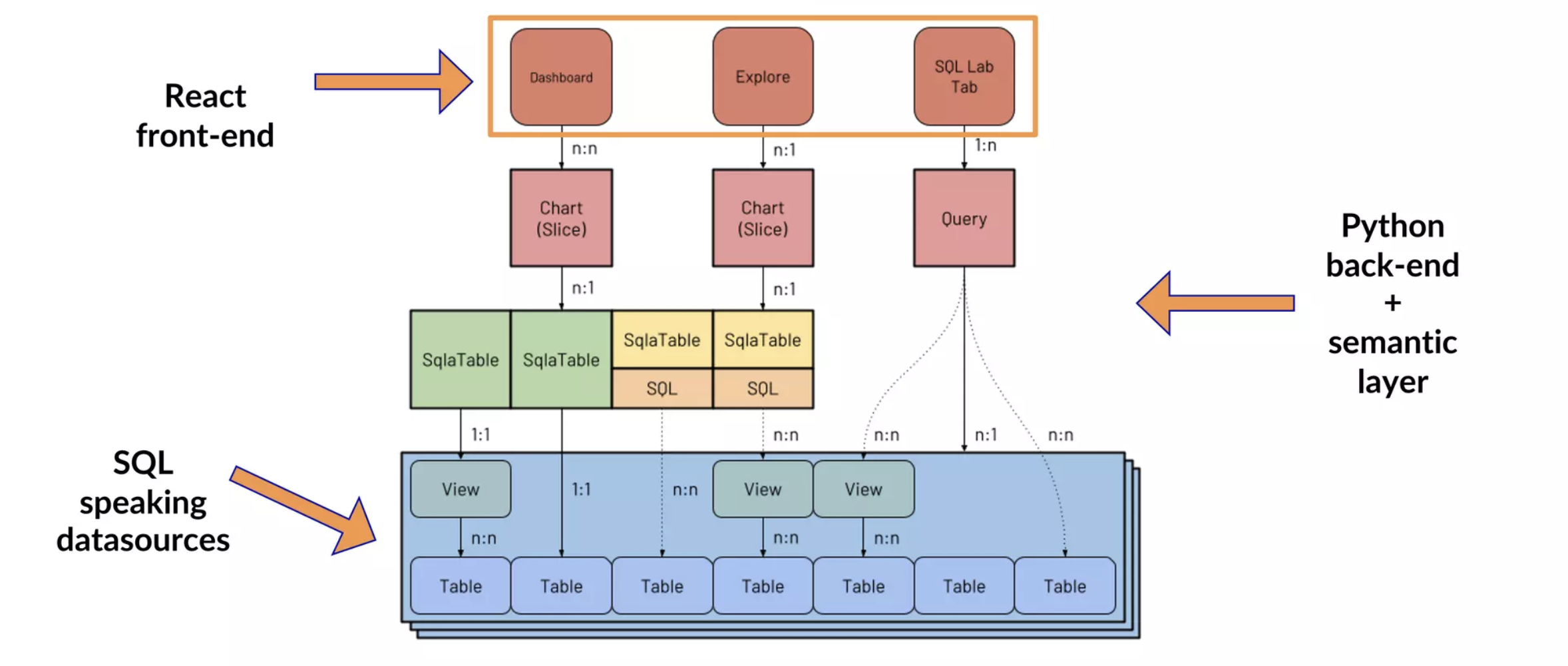
Datapunkt BI organizes its data layer into two main categories: physical datasets and virtual datasets.
-
Physical Datasets: Represent tables or views in the underlying database and offer a straightforward way to interact with structured data.
-
Virtual Datasets: Elevate freeform SQL queries into dataset entities in Datapunkt BI, allowing users to leverage the power of raw SQL while benefiting from BI tool features.
Incorporating Schemas in Datapunkt BI
Schemas play a crucial role in organizing and structuring data within Datapunkt BI. A schema is essentially a blueprint that defines the structure of the database, encompassing tables, relationships, and access controls. Datapunkt BI supports schemas, providing the following advantages:
1. Logical Data Organization
Schemas enable the logical organization of data, facilitating a systematic approach to managing tables and views. This ensures that data is structured in a meaningful and coherent manner.
2. Enhanced Security and Access Control
By leveraging schemas, Datapunkt BI allows for granular access controls. Organizations can define specific permissions and restrictions within each schema, ensuring data security and privacy.
3. Multi-Tenancy Support
Schemas are instrumental in supporting multi-tenancy scenarios, allowing different users or departments to operate within their designated schema while sharing the same database.
Connecting Multi Databases and Schemas in Datapunkt BI
Datapunkt BI supports the integration of multiple databases and schemas for comprehensive data analysis. Strategies to achieve this include:
1. Separate Connections
- Establish distinct connections to each database and schema.
- Create datasets and visualizations independently for each database and schema.
- Note: This approach restricts direct querying across databases within a single visualization.
2. Meta Database (Experimental)
- Enable the experimental "Datapunkt meta database" feature.
- Utilize a unified syntax to query tables from any configured database and schema.
- Note: Thoroughly test this feature before production use.
3. Database-Specific Features
- Leverage database-specific features, such as Foreign Data Wrappers (PostgreSQL) or Database Links (Oracle), for cross-database and cross-schema queries.
4. External Data Connectors
- Integrate Datapunkt BI with external tools like Apache Drill or Dremio to query multiple databases and schemas through a unified interface.
Conclusion
Building a Semantic Layer in Datapunkt BI, enriched by the strategic use of schemas, empowers organizations to extract meaningful insights seamlessly. By understanding the nuances of physical and virtual datasets, and exploring various methods to connect to multiple databases and schemas, users can unlock the full potential of Datapunkt BI for their business intelligence needs.
As Datapunkt BI continues to evolve, organizations can navigate the dynamic landscape of data-driven decision-making with confidence. Schemas serve as a cornerstone in this journey, providing a structured framework for efficient data management and analysis. Embrace the power of Datapunkt BI's Semantic Layer and schemas to elevate your business intelligence experience to new heights.